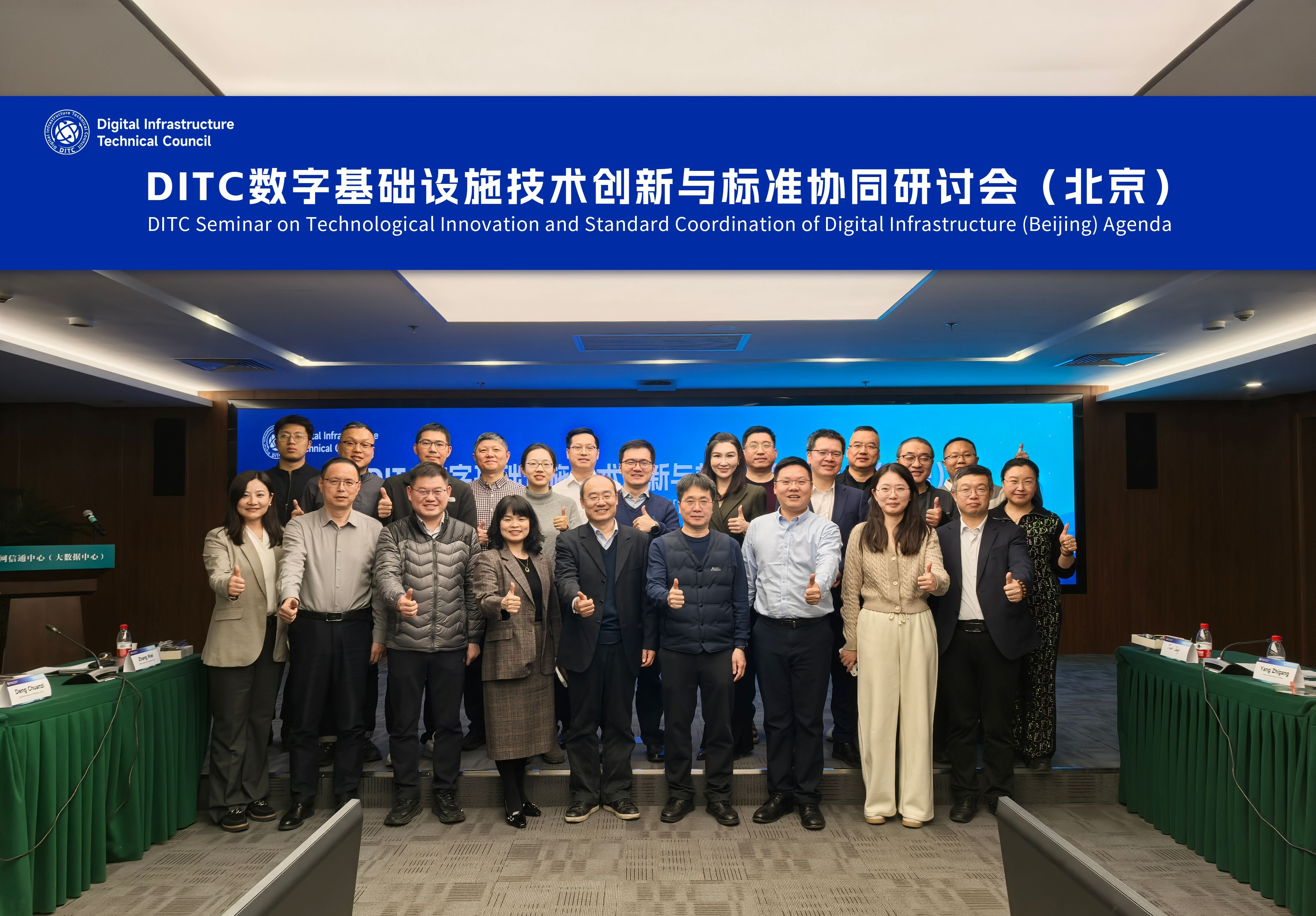
DITC Beijing Seminar Advances Global Consensus on Digital Infrastructure Standards
Accelerating International Standards Development to Drive High-Quality Growth in Digital Infrastructure
On January 29, 2026, DITC Seminar on Technological Innovation and Standard Coordination of Digital Infrastructure (Beijing) was successfully held in a hybrid online and offline format at the State Grid Corporation of China Information & Communication Center (Big Data Center).
This seminar co-organized by the Digital Infrastructure Technical Council (DITC) and the China Communications Industry Association Data Center Committee(CIDC), the event brought together leading industry representatives, academic experts, and standards specialists from China, Singapore, Southeast Asia, and beyond to advance the development of international standards and promote technological innovation in digital infrastructure.
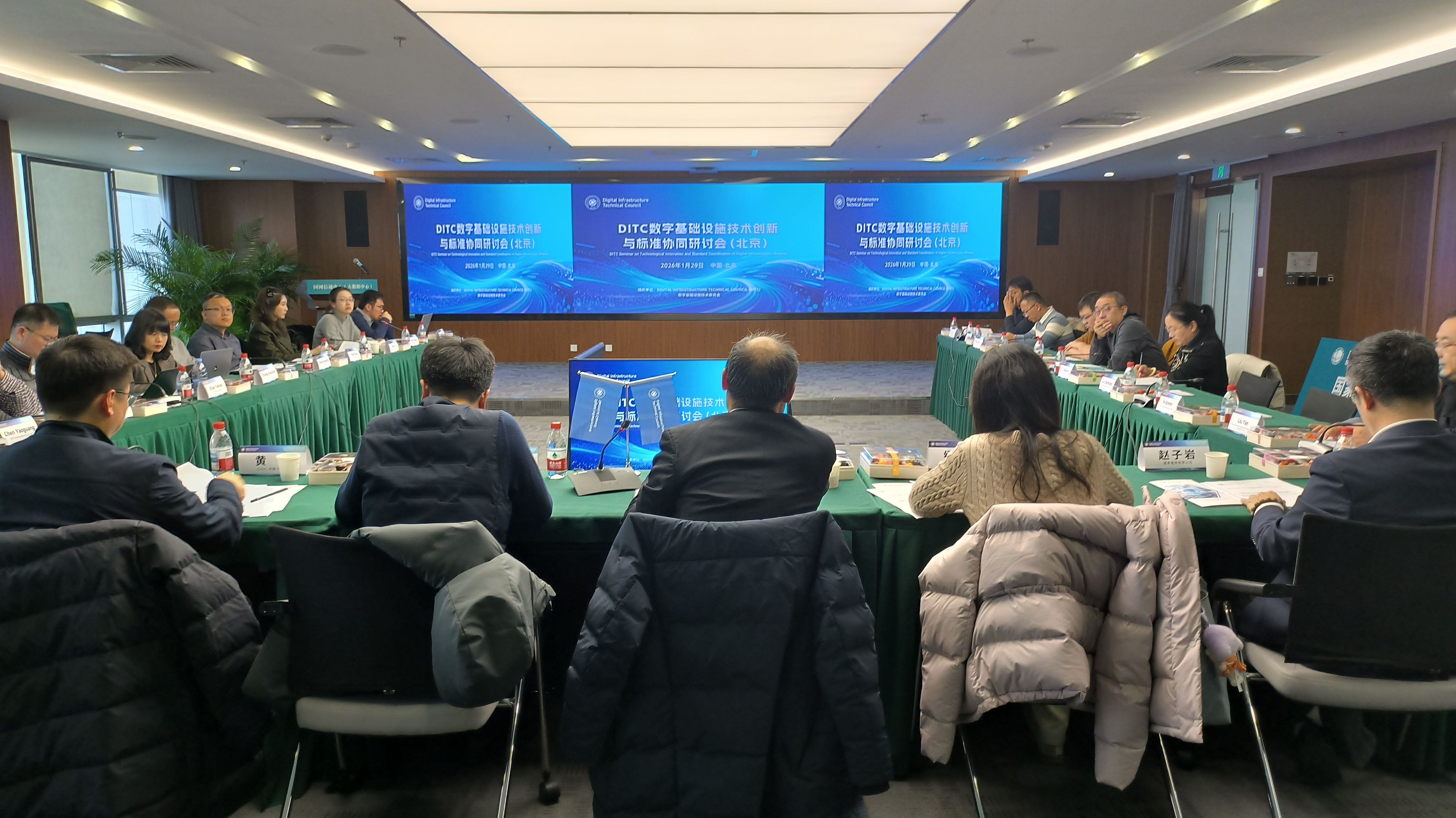
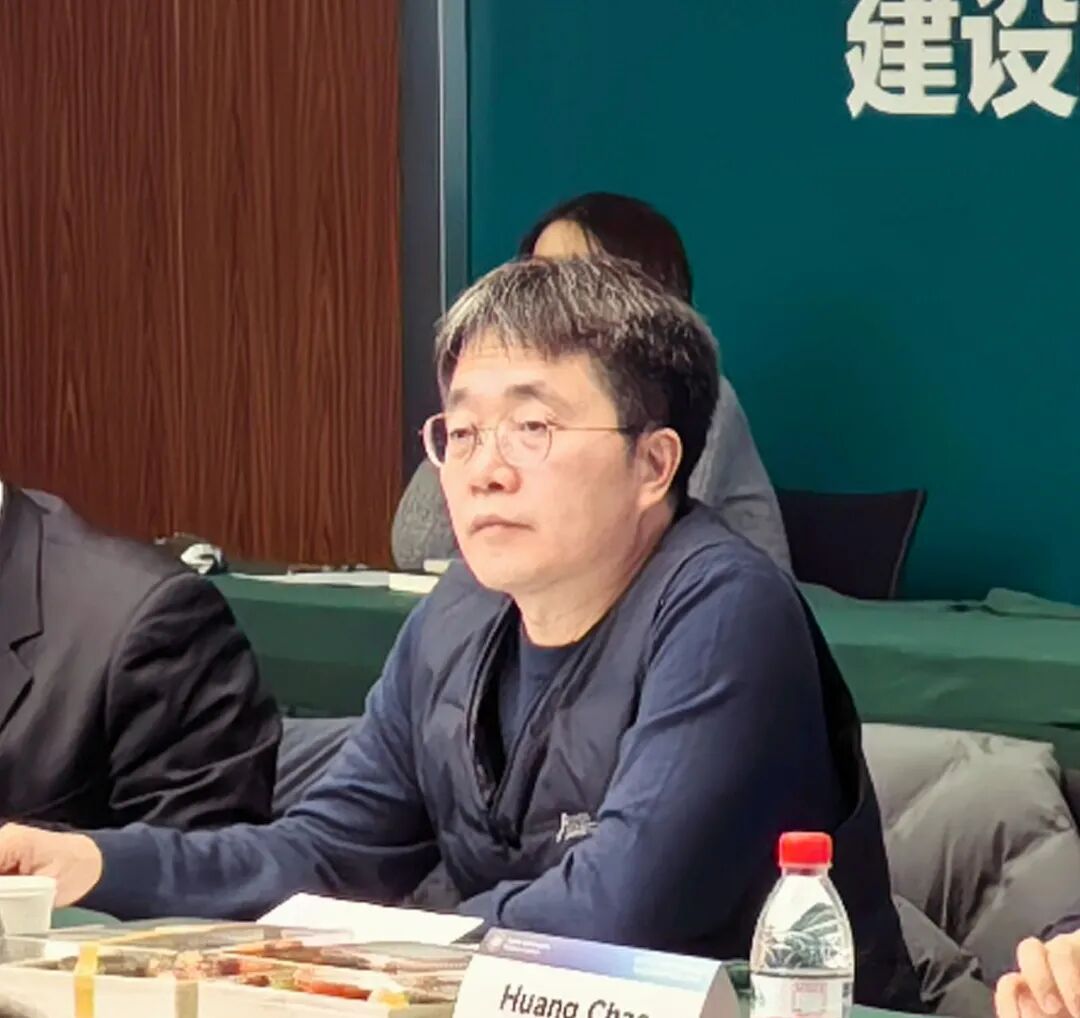
The seminar was hosted by Director Wu Tong (Director of the Advanced Measurement Engineering Center at the National Institute of Metrology, China). In opening remarks, Prof. Yang Ronggui (Vice Chair of DITC, Chair Professor at Peking University, and Director of the Department of Energy and Resources Engineering), emphasized that
“those who lead in digital technology standards lead in technology and market influence, establishing an open, unified, and scientific standard system is essential for global coordination in digital infrastructure. DITC will continue to leverage its international platform to deepen industry-academia-research collaboration and accelerate the development and adoption of international standards."
In-Depth Standards Discussion: Focusing on Innovation and Sustainability
The core agenda featured detailed discussions on two draft international standards:
1️⃣ Guide for Sustainable Operation and Maintenance Management of Data Centers
Presented by Deng Chuanzi (Assistant Researcher at the National Institute of Metrology, China) the guidelines are designed as a non-mandatory framework to help data centers establish systematic management approaches in organizational development, data collection, performance management, and risk control. The guidelines introduce an operational indicator system covering four dimensions: energy efficiency, resources, environment, and reliability. Rather than setting rigid thresholds, the document emphasizes continuous improvement through data collection and systematic optimization. It also aligns with ISO 50001 energy management systems, outlining nine key management requirements grounded in principles of balanced control, data-driven decision-making, and clear accountability.
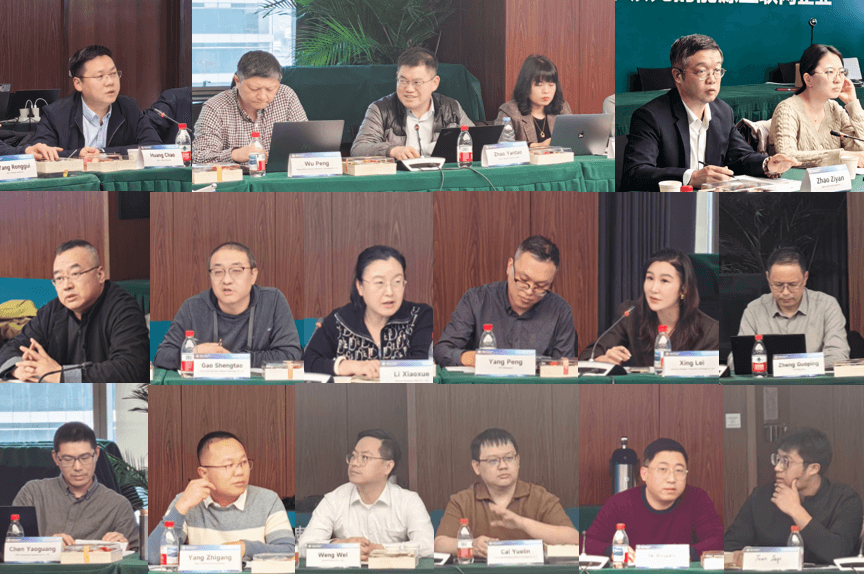
Participants engaged actively in discussions on indicator refinement and adaptability for different types of data centers. Industry representatives shared practical cases, such as AI-driven fault prediction and seawater cooling for PUE reduction, providing valuable input for further optimization of the guidelines.
2️⃣Test and Verification Guide for Liquid Cooling Fluid Connectors of the Intelligent Computing Center
Zhang Wei (Head of the Liquid Cooling Testing and Verification R&D Group at the National Institute of Metrology, China) presented the draft standard, addressing key industry pain points: leakage risks, coolant stability, lack of unified standards, high lifecycle costs, and operational complexity. The guidelines propose a comprehensive testing and verification system covering the full lifecycle of liquid cooling solutions, structured around a three-tier certification framework: product, system, and project levels. The draft focuses on four testing categories for fluid connectors: basic parameters, environmental adaptability, leak prevention, and maintainability—each with clear experimental methods and equipment requirements.
Experts engaged in in-depth discussions on parameter settings and industry applicability, acknowledging the standard’s practicality and forward-looking approach.
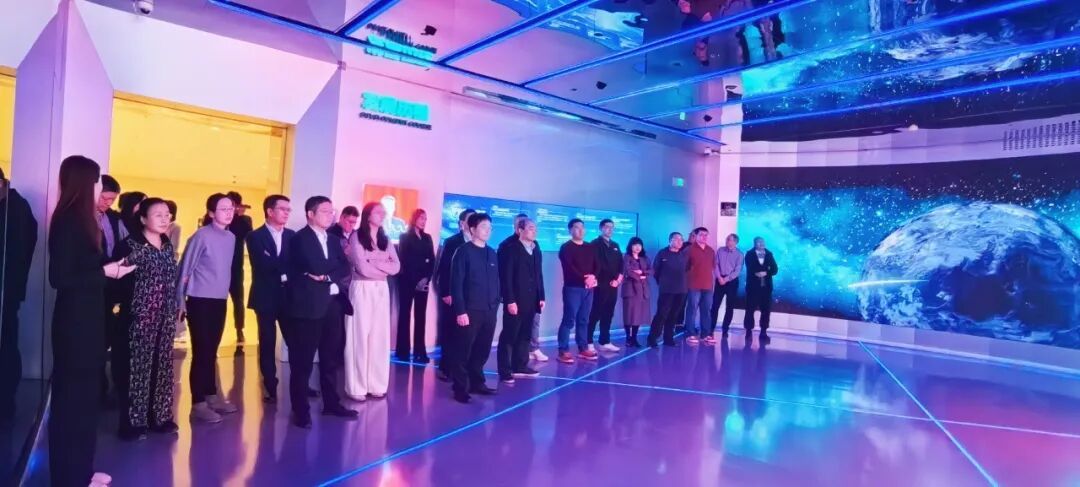
During the seminar, attendees also visited the State Grid Electric Power Big Data Laboratory and the Energy Big Data Exhibition Hall, gaining insights into innovative applications of power big data and energy digitalization, which provided practical references for standards development.
Future Roadmap: Strengthening Global Industry Collaboration
Shen Qingfei (Director of the Intelligent Engineering Laboratory at the National Institute of Metrology, China) presented DITC’s 2026 work plan. Key focus areas include advancing international standards development, improving testing and verification systems, promoting product certification, and deepening global cooperation.In the following roundtable session, participants exchanged views on global digital economy trends, technological innovation directions, and DITC’s future role. There was strong consensus on the need for cross-regional and cross-industry collaboration to facilitate the international adoption and application of standards, leveraging technology and standards coordination to address industry bottlenecks.
The DITC Beijing seminar marks a significant step in accelerating the development of international standards for digital infrastructure. By fostering global consensus and creating a platform for dialogue between technology and standards stakeholders, DITC aims to support the high-quality and sustainable development of digital infrastructure worldwide. Moving forward, DITC will continue to promote the integration of industry, academia, research, and application, driving the implementation of international standards to provide a solid foundation for the globalization of the digital economy.
Published: February 3, 2026
Category: Events
Popular Articles
Online International Data Center Forum
Online International Data Center Forum Venue: Online Date: 2020.11.12 Host: IDCNOVA
2022 Data Center International Cooperation Conference
2022 Data Center International Cooperation Conference Venue: China National Convention Center Host: IDCNOVA
Related Articles
Online International Data Center Forum
Online International Data Center Forum Venue: Online Date: 2020.11.12 Host: IDCNOVA